Best Knee Scooter for Seniors: Top Picks for Safe, Comfortable Recovery

When recovering from a leg, ankle, or foot injury, maintaining mobility can be a challenge, especially for seniors and older adults. Traditional crutches or a standard walker are not always the best option since they require upper-body strength and good balance. A knee scooter offers a safer, more comfortable alternative that helps you stay independent during the healing process. These medical devices provide excellent stability and make it easier to move around your home and outdoor spaces.

Senior woman using a knee scooter indoors during recovery from a foot or ankle injury

LivingYourSeniorLife is supported by its audience. When you purchase through links on our site, we may earn a small affiliate commission at no cost to you. Learn more.
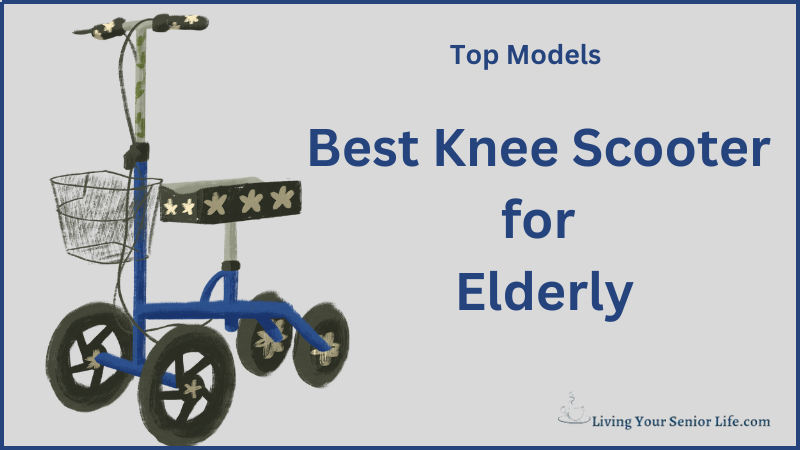
Quick Recommendation for Seniors

For most seniors, the Vive Knee Scooter is our top pick. It offers excellent stability, a comfortable knee platform, and reliable dual brakes for everyday indoor and outdoor use on paved surfaces. It’s a strong balance of comfort, safety, and value for typical recovery needs.

This comprehensive guide reviews five highly rated knee scooters, highlighting their key features, strengths, and potential drawbacks. The goal is to help you choose the best option to support your healing process, improve mobility, and confidently manage daily activities during recovery.

Quick Comparison Table

ImageProductCustomer RatingProduct WeightWheel SizeWeight CapacityBest ForPrice
ELENKER Knee ScooterELENKER⭐⭐⭐⭐ 4.0/5
(330+ Reviews)
26 lbs8″
Solid PVC
300 lbsBudget, mostly indoorBudget
Vive Mobility All Terrain Knee ScooterVive⭐⭐⭐⭐ 4.3/5
(1,945+ Reviews)
26 lbs12″
Pneumatic (air-filled)
350 lbsEveryday home use, easy steeringMid-range
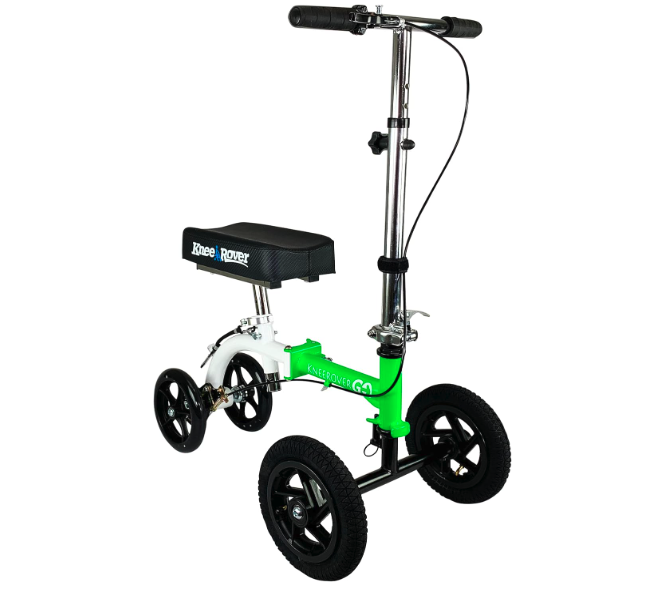
Best Knee Scooter for Elderly - KneeRover GO HybridKneeRover GO⭐⭐⭐⭐ 4.2/5
(675+ Reviews)
21 lbs9″
Pneumatic (air-filled)
300 lbsEvery day home use, stable steeringPremium
BodyMed All-Terrain Knee WalkerBodyMed⭐⭐⭐⭐ 4.2/5
(775+ Reviews)
35 lbs12″
Pneumatic (air-filled)
350 lbsHigher weight capacity, max stabilityMid-range
Roscoe Medical Knee Walker ScooterRoscoe⭐⭐⭐⭐ 3.9/5 (370+ Reviews)27 lbs8″
Solid PU
350 lbsLow maintenance wheels, carry items oftenMid-range

With all products, features can change, so be sure the qualities that attract you to the product are still the same before purchasing.
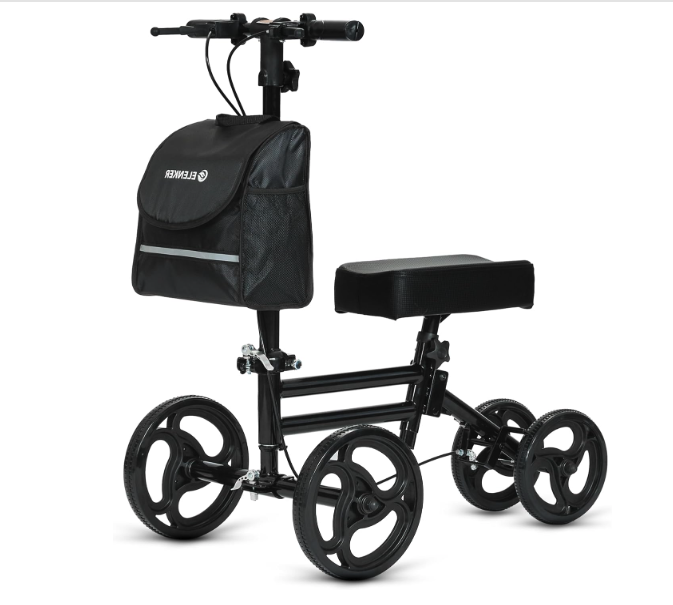

Best Knee Scooters for Seniors: Detailed Reviews

ELENKER

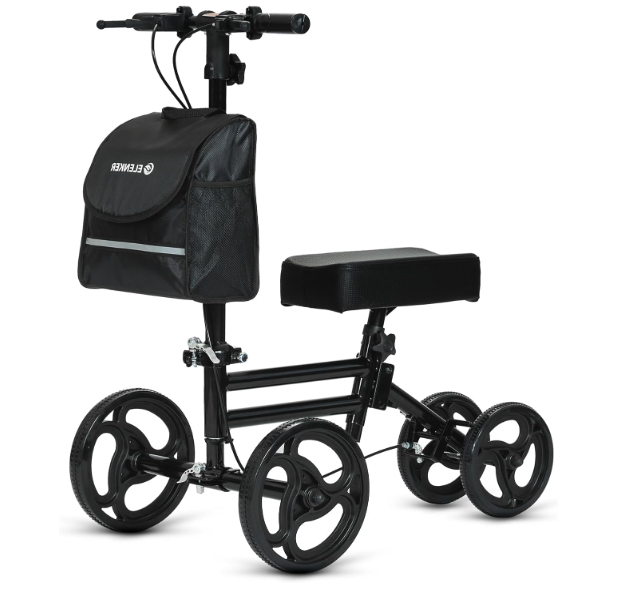
Best knee scooter for seniors - ELENKER Knee Scooter

Rating: ⭐⭐⭐⭐ 4.0/5 (330+ Reviews)

If you’ve recently undergone foot surgery or have a leg injury, the ELENKER Knee Scooter is an affordable and efficient mobility aid to support your recovery process.

Strengths

  • Budget-friendly option without sacrificing essential features
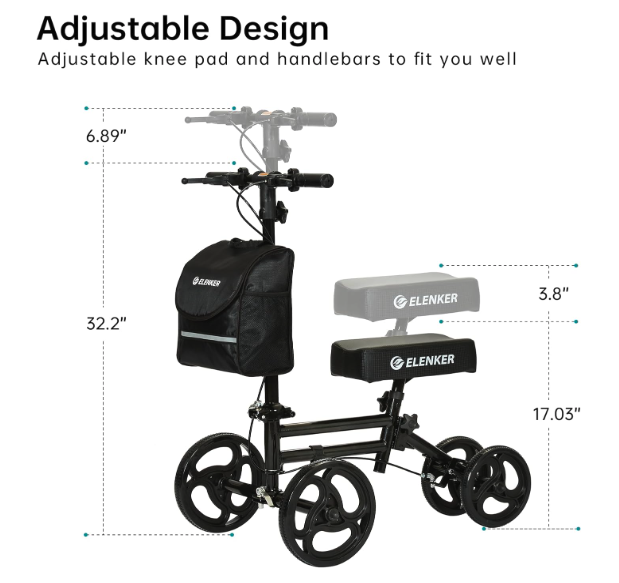
  • Adjustable knee rest and handlebar height cater to your comfort for longer distances
  • Quick folding mechanism makes it a great choice for transport and storage in tight spaces
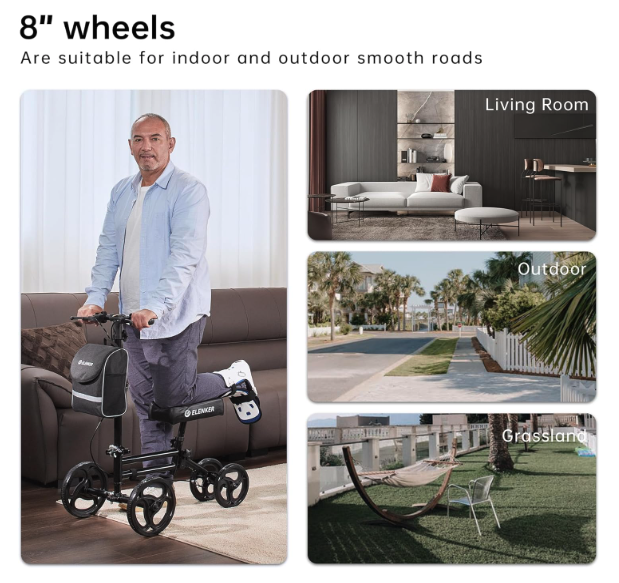
  • Suitable for both indoor and outdoor use on smooth surfaces

Areas for Improvement

  • 300 lb weight capacity may not suit all users
  • Wheels may struggle on very rough outdoor terrain compared to pneumatic tire models
  • Some users report that the assembly instructions could be clearer

Detailed Review

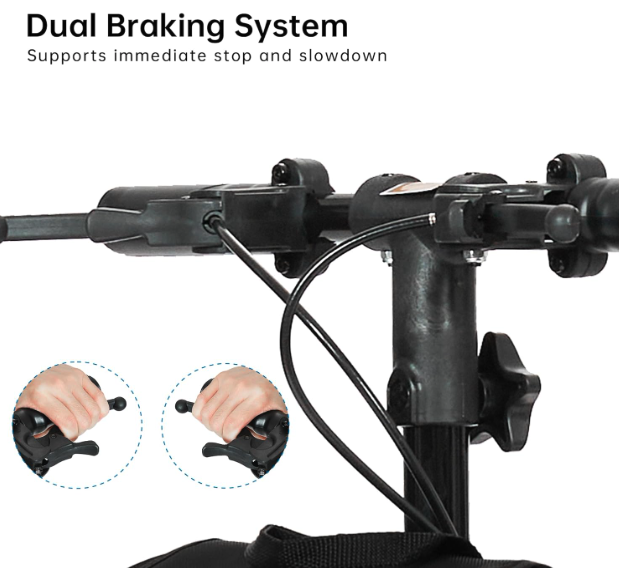
Navigating around the home with a lower extremity injury can be cumbersome with a traditional walker. This steerable knee walker offers excellent stability, perfect for keeping up with your routine without putting weight on your affected leg. The dual hand brakes are easy to operate, even for those with arthritis in their hands, providing reliable stopping power when needed.

The robust frame of this knee scooter comfortably supports up to 300 lbs, showcasing a good balance of lightweight design (26 lbs) and sturdy build. Maneuvering through your living room or kitchen, you’ll appreciate the solid 8-inch PVC wheels that handle indoor flooring smoothly. When heading outside on paved surfaces, the wheels roll smoothly, making this a good option for those requiring a mix of indoor and outdoor mobility.

Its lockable braking system adds an extra layer of security, particularly important for seniors concerned about falls.

Best for: Seniors on a budget who primarily need indoor mobility with occasional outdoor use on smooth surfaces.

User height range: 4’9″ to 6’6″

Assembly note: Takes approximately 15-20 minutes. A second person can be helpful, but isn’t required.


Vive 

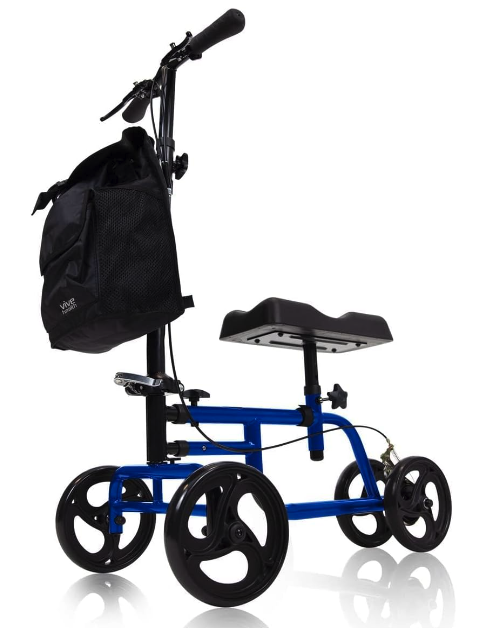
Best knee scooter for seniors - Vive Mobility All Terrain Knee Scooter

Rating: ⭐⭐⭐⭐ 4.3/5 (1,945+ Reviews)

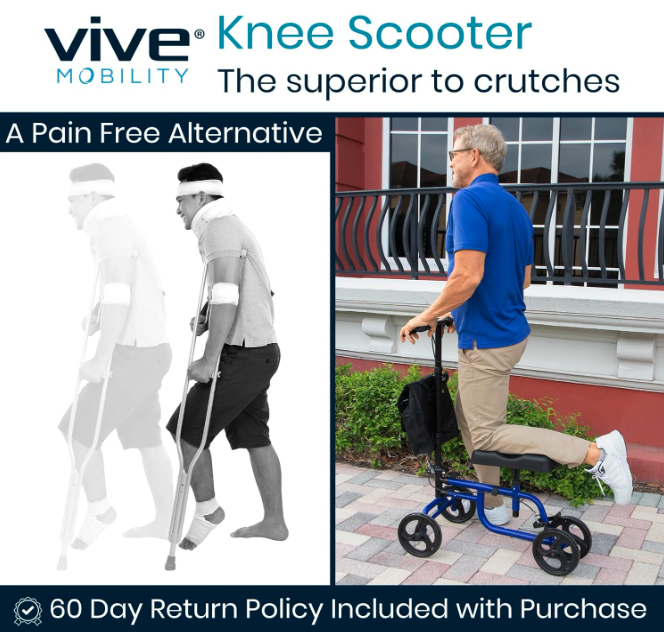
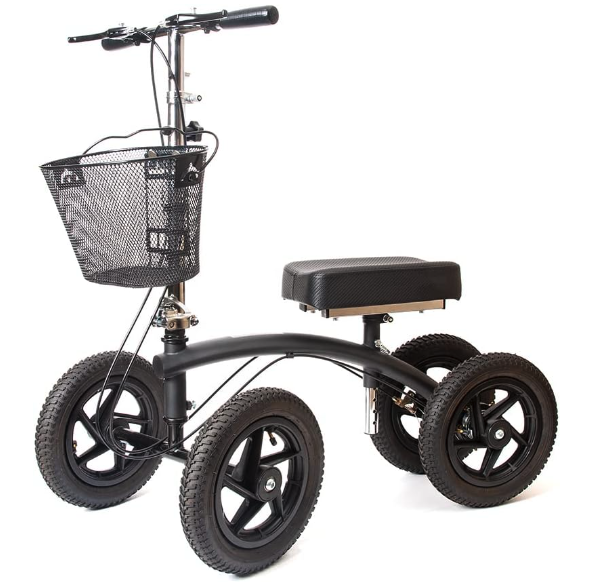
You’ll appreciate the freedom this knee scooter provides compared to traditional crutches, especially if you are recovering from foot surgery or managing a lower leg injury. The Vive Knee Scooter is designed to support everyday mobility while prioritizing comfort, stability, and ease of use.

Strengths

  • Comfortable contoured knee rest designed for extended use
  • Large 12-inch pneumatic wheels provide excellent stability on a variety of surfaces
  • Dual hand brake system offers reliable control with minimal grip strength required
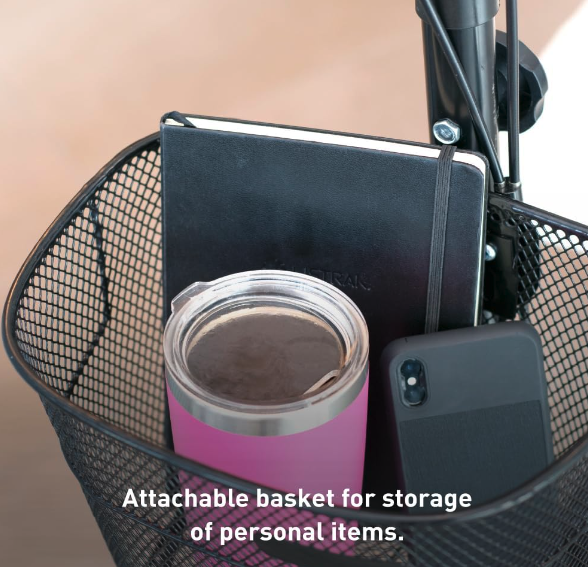
  • Attached storage bag keeps personal items like phones, medications, or books within easy reach
  • Lightweight design at approximately 26 lbs makes transport more manageable
  • Available in multiple colors to suit personal preferences
  • Strong customer support and warranty coverage from Vive

Areas For Improvement

  • The larger wheels create a wider turning radius, which may be challenging in very narrow indoor spaces such as small bathrooms or tight hallways
  • Initial assembly can take some patience

Detailed Review

This steerable knee walker from Vive Mobility is a dependable alternative to crutches for seniors recovering from foot or ankle injuries. The contoured knee cushion offers excellent comfort, which is especially important when moving around the home throughout the day. The cushion is removable and easy to wipe clean, helping maintain hygiene during recovery.

With a weight capacity of up to 350 pounds, the Vive Knee Scooter provides a stable and secure riding platform. The large 12-inch pneumatic wheels are a standout feature, delivering smooth movement across indoor flooring as well as outdoor surfaces like sidewalks and paved paths. This added stability helps users feel more confident when navigating longer distances.

The dual rear braking system is easy to operate and does not require excessive hand strength, making it a good option for seniors with arthritis or reduced grip strength. While the larger wheels enhance stability and surface performance, they do require slightly wider turns indoors. In standard-sized homes, maneuvering remains comfortable, though very tight spaces may require more careful positioning.

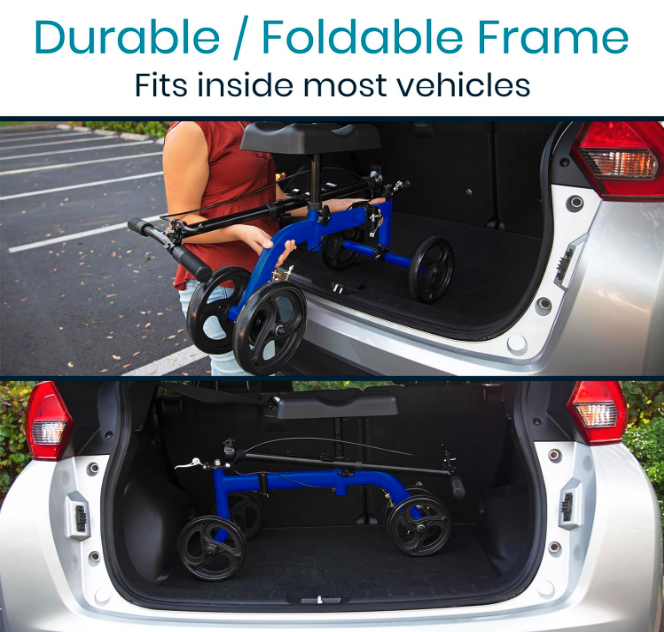
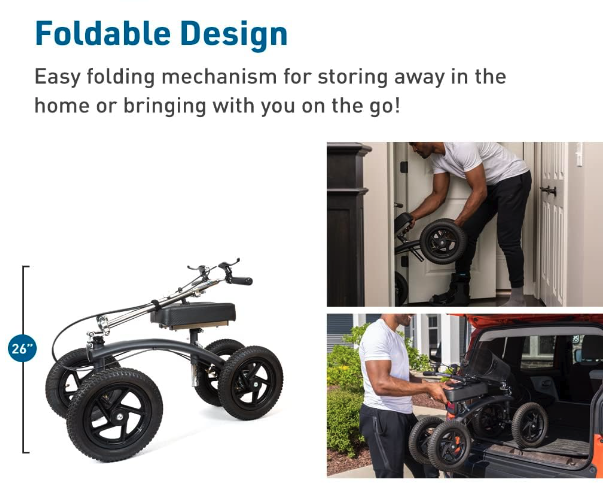
When not in use, the quick-folding design allows the scooter to be stored easily or placed in most car trunks, making it practical for errands, appointments, or travel.

Best for: Seniors who want dependable everyday mobility indoors and outdoors on paved surfaces and who live in standard-sized homes where stability is a priority.

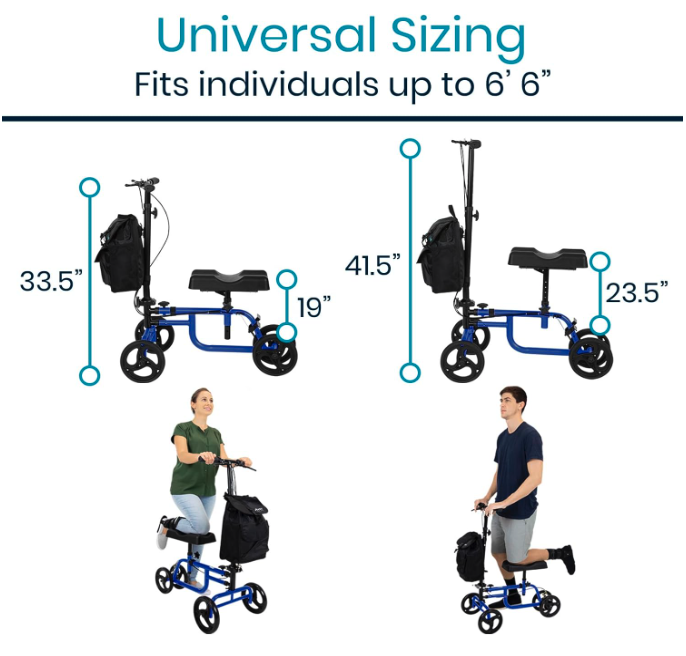
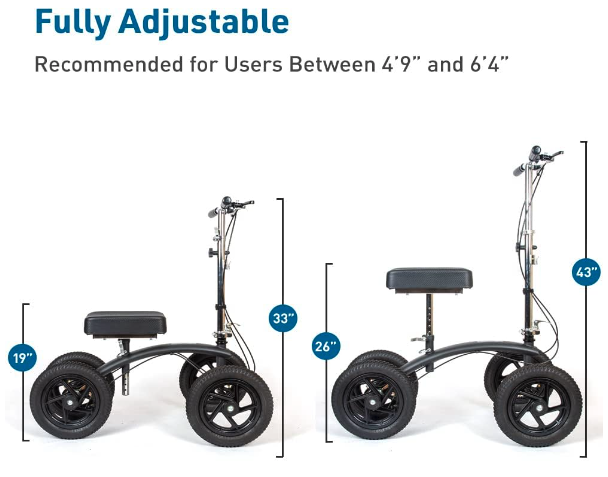
User height range: 5’3″ to 6’6″

Special features: The attached storage bag is especially helpful for keeping daily essentials close at hand without sacrificing balance or comfort.


KneeRover GO Hybrid

Best knee scooter for seniors - KneeRover GO Hybrid

Rating: ⭐⭐⭐⭐ 4.2/5 (675+ Reviews)

For those in the recovery process from a lower leg injury who want to maintain an active lifestyle, the KneeRover GO Hybrid is a robust choice offering excellent stability on various surfaces and ease of transport.

Strengths

  • Handles gravel, grass, and rough sidewalks better than standard models
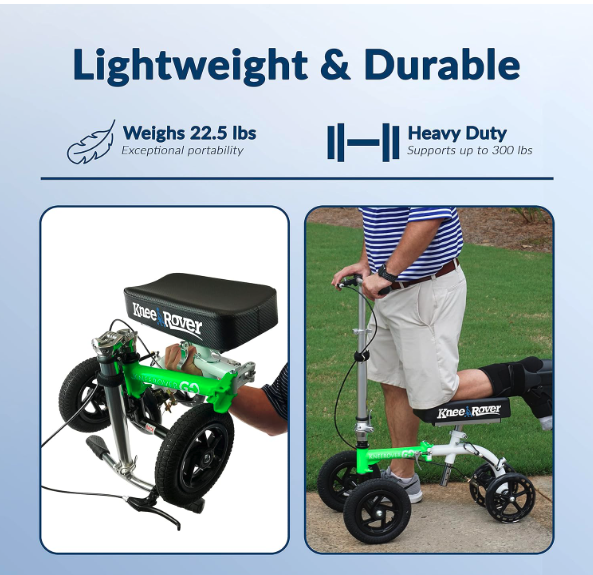
  • Lightweight at about 21 lbs
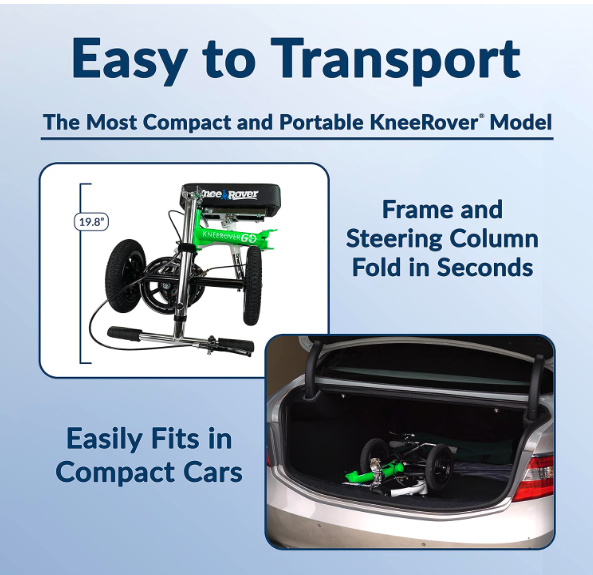
  • Folds swiftly for easy storage and transport, even in tight spaces
  • Comfortable knee rest with thick cushioning
  • Compatible with both left and right-leg injuries
  • Compact when folded for car transport

Areas For Improvement

  • Initial assembly requires inflation of pneumatic tires (pump not included)
  • Higher price point than basic models
  • Pneumatic tires may require occasional air refills

The recovery journey from a foot or knee injury shouldn’t keep you confined indoors. The KneeRover GO Hybrid proves to be an excellent alternative to traditional crutches, offering freedom and support to manage your daily activities with ease, both inside and outside your home. Your injured leg will thank you for the comfortable knee pad, significantly reducing the discomfort typical of underarm crutches.

This steerable knee walker is designed for those who refuse to let an injury slow them down completely. Its ability to navigate through uneven terrain with its 9-inch air-filled front wheels sets it apart from standard models. Whether you’re walking your dog on a gravel path, visiting the garden, or navigating uneven sidewalks, this scooter handles surfaces that would stop other models in their tracks.

The ease with which it can be folded and transported makes it a practical companion for both indoor and outdoor use. Many seniors appreciate being able to take it to appointments, family gatherings, or even on vacation. Handling long distances with this device, compared to the use of crutches or a traditional walker, is remarkably easier and less fatiguing.

Although the rear wheels are smaller than the front, this design actually improves indoor maneuverability while the large front wheels conquer outdoor challenges.

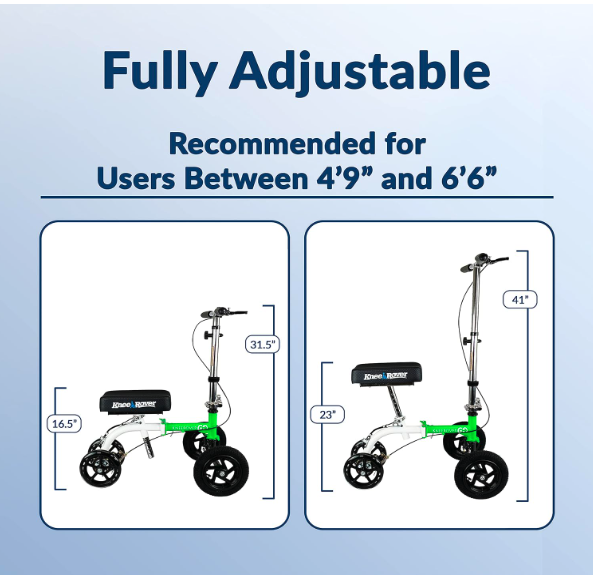
Finding the optimal handlebar height and knee rest position is effortless with the easy-adjust mechanisms, accommodating users from 4’9″ to 6’6″ with a weight capacity of 300 lbs. The KneeRover GO Hybrid stands out among terrain knee scooters for its portability and user-centered design, setting it apart as a top pick for active seniors who need a reliable and comfortable mobility aid after ankle surgery or foot injuries.

Best for: Active seniors who want to maintain outdoor activities, those with rough terrain around their home, or anyone who refuses to let an injury completely limit their lifestyle.

User height range: 4’9″ to 6’6″

Important note: You’ll need to purchase a bike pump to inflate the front tires initially, but this is a one-time task.


BodyMed All-Terrain

Best knee scooter for seniors = BodyMed All-Terrain Knee Walker

Rating: ⭐⭐⭐⭐ 4.2/5 (775+ Reviews)

Relying on the BodyMed Knee Scooter during recovery will significantly improve your mobility over traditional crutches, thanks to its sturdy design, higher weight capacity, and all-terrain capabilities.

Strengths

  • The weight capacity of 350 lbs provides confidence for larger users
  • Excellent stability on uneven surfaces
  • Pneumatic tires offer a smooth ride both indoors and outdoors
  • Quick folding mechanism for easy transportation
  • Robust construction feels very solid

Areas For Improvement

  • At 35 pounds, it’s the heaviest model reviewed, which may make it harder to lift into vehicles
  • A wide turn radius may limit maneuverability in very tight spaces
  • Higher price point than basic models

Detailed Review

While traditional crutches can be cumbersome and uncomfortable, the BodyMed Knee Scooter provides a level of freedom that’s hard to beat, especially for larger individuals who need a higher weight capacity. Its all-terrain wheels smoothly negotiate the challenges of daily activities, offering you a reliable way to move about with confidence.

Navigating your home or office becomes effortless with this steerable knee walker. The steering handle provides precise control, which you’ll appreciate when making turns or navigating through doorways. The adjustable handlebar height accommodates a range of user sizes (5’5″–6’4″), making it a versatile option for tall individuals or those who require higher handlebars for comfort.

What sets BodyMed apart is its 350 lb weight capacity, one of the highest available. This isn’t just about supporting more weight—it means the entire scooter is built more robustly, providing exceptional stability that inspires confidence during use. Many users report feeling safer on this model compared to lighter-weight alternatives.

For those days when you have errands that take you further afield, the scooter’s ability to handle outdoor use over longer distances is a significant advantage. It lets you maintain an active lifestyle, even with a lower leg injury. The pneumatic tires absorb bumps and provide a smoother ride than solid wheels, reducing jarring that could be uncomfortable on an injured leg.

When the day is done, the quick-folding mechanism comes in handy for stowing away the scooter neatly, though you’ll want to keep in mind it weighs 35 lbs when lifting it. It’s not just a mobility aid; it’s a piece of medical equipment that enhances your recovery process with durability you can depend on.

Best for: Larger individuals who need the confidence of a higher weight capacity, or anyone who prioritizes maximum stability and robust construction.

User height range: 5’5″–6’4″

Weight capacity: 350 lbs

Storage tip: While it folds for storage, consider where you’ll keep it due to its 35 lb weight. A garage or ground-floor closet works well.


Roscoe Knee Scooter

Best knee scooter for seniors - Roscoe

Rating: ⭐⭐⭐⭐ 3.9/5 (370+ Reviews)

For those with a lower leg injury who need a durable, reliable knee scooter that will last through an extended recovery period, the Roscoe Knee Scooter offers a balanced blend of comfort, mobility, and safety.

Strengths

  • High weight capacity of 350 lbs accommodates a broad range of users
  • Polyurethane wheels provide durability and puncture-proof performance
  • Convenient quick-folding mechanism with thumb release for easy transport
  • Sizeable storage basket for carrying personal items hands-free
  • Robust build quality suggests longevity

Areas For Improvement

  • A bulkier design might be challenging to maneuver in very tight spaces
  • At 27 lbs, heavier than some compact models
  • PU wheels, while durable, may not provide as smooth a ride as pneumatic tires on very rough terrain

Detailed Review

Navigating through recovery from a broken foot or an ankle injury, the peace of mind provided by a durable mobility device is invaluable. The Roscoe Knee Scooter proves to be a resilient companion, supporting up to 350 lbs and accommodating patient heights from 4’11” to 6’6″. It’s versatile enough for both indoor use and traversing moderately uneven surfaces outside.

The 8-inch polyurethane wheels are a standout feature—they’re completely flat-free, meaning you’ll never worry about a flat tire interrupting your recovery. This makes the Roscoe particularly appealing for those with longer recovery periods who need reliability day after day. Coupled with the generously padded knee platform, it becomes a practical choice for anyone preferring not to rely on traditional crutches.

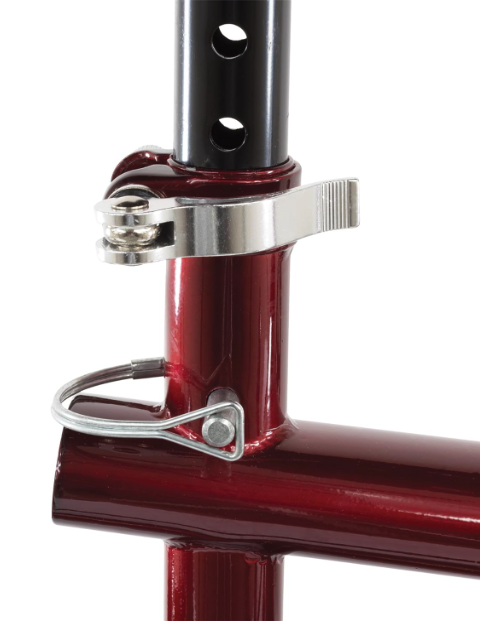
A notable advantage of this steerable knee walker is the ease of transport. The thumb release lever activates a quick folding mechanism that simplifies stowing the scooter into a car trunk or closet. Even with its sturdy 27 lb build, the folding process is smooth and doesn’t require excessive strength. Additionally, the ample knee rest space ensures comfort for longer distances, which comes in handy when shopping or attending events.

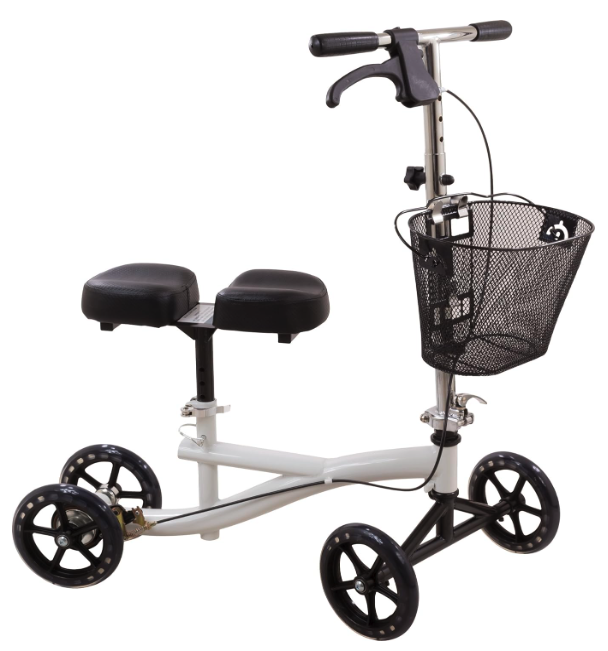
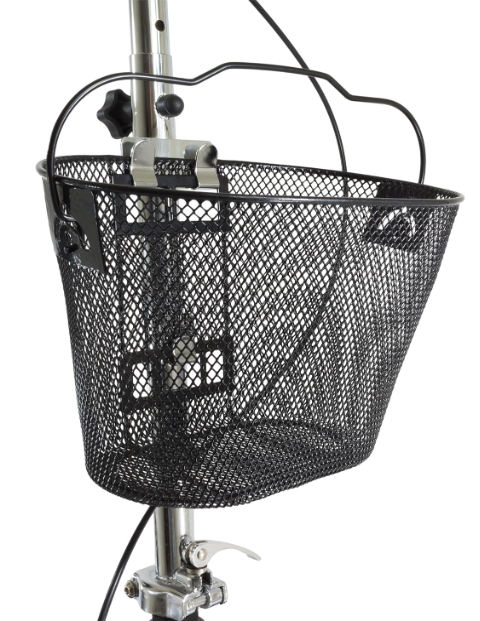
The sizeable front basket is larger than on many competing models, allowing you to load personal items, groceries, or medical supplies for hands-free mobility. This is particularly valuable for seniors who live independently and need to carry items while moving around.

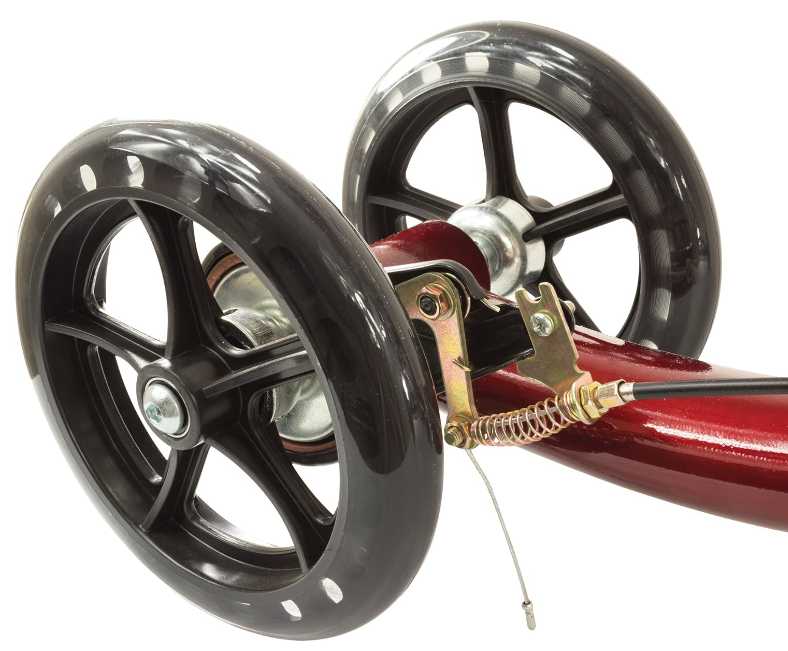
The brake system is designed for easy operation, requiring minimal hand strength—an important consideration for those with arthritis.

Concerns are minimal but worth noting: navigating tight corners may require some extra effort due to the size of the scooter, and while it handles outdoor terrain well, the PU wheels don’t absorb bumps quite as effectively as air-filled tires. However, the trade-off is never having to worry about tire maintenance or flats.

Best for: Seniors with longer recovery periods who prioritize durability and low maintenance, or those who need to carry items regularly while using the scooter.

User height range: 4’11” to 6’6″

Weight capacity: 350 lbs

Maintenance advantage: The polyurethane wheels require zero maintenance—no air to check, no flats to fix.


Knee Scooter vs. Crutches: Why Seniors Choose Scooters

If you’re recovering from foot surgery, ankle surgery, or a lower leg injury, you might wonder whether to use crutches or a knee scooter. For most seniors, knee scooters offer significant advantages:

Advantages of knee scooters over crutches:

  • No upper body strain – Crutches require significant arm and shoulder strength, which can be challenging for seniors with arthritis or limited upper body strength
  • Better stability – Four wheels provide a stable base, reducing fall risk compared to balancing on crutches
  • Faster mobility – You can move more quickly and cover longer distances without fatigue
  • Hands-free option – The basket allows you to carry items while moving around
  • Reduced back pain – Maintaining an upright posture prevents the back strain common with crutches
  • Prevents muscle loss – Your uninjured leg stays active, helping maintain muscle tone

When crutches might be better:

  • Very tight spaces, like narrow hallways or small bathrooms
  • Stairs (most knee scooters cannot navigate stairs)
  • Short-term use of just a few days

For most recovery periods lasting weeks or months, a knee scooter provides greater comfort and independence for seniors.

How to Choose the Right Knee Scooter: Buying Guide

Assessing Your Needs

Before choosing the best knee scooter, take a moment to consider a few important factors related to your specific situation and recovery needs.

Your injury and recovery timeline

Recovery timelines vary widely depending on the type of injury, the procedure performed, and individual healing factors. Many foot, ankle, and lower-leg injuries require a period of limited or non-weight-bearing, which is when a knee scooter can be especially helpful.

  • Some recoveries last a few weeks, while others may require several months of mobility support
  • More complex injuries or surgeries often involve longer recovery periods and a greater need for comfort and stability
  • Your doctor or physical therapist will determine how long you need mobility assistance based on your progress

If you expect to rely on a knee scooter for more than a few weeks, comfort, durability, and ease of use become especially important. For shorter recovery periods, portability and budget may be higher priorities.

Your living environment

  • Apartment or home with tight spaces? Prioritize maneuverability
  • Multi-level home? Consider the scooter’s weight if it needs to be carried between floors
  • Outdoor property with gravel or grass? Choose an all-terrain model
  • Smooth, paved surfaces only? Standard wheels are usually sufficient

Your physical characteristics

  • Required weight capacity
  • Height range for proper handlebar adjustment
  • Upper body strength, which affects brake comfort and control
  • Arthritis or hand pain, which can influence brake ease of use

Key Features to Look For

When selecting a knee walker, weight capacity is one of the most important considerations. The scooter should comfortably support your body weight while providing a stable riding platform.

For indoor use in tighter spaces, a steerable knee walker with smaller front wheels is often easier to manage. If outdoor use is part of your daily routine, larger wheels may offer better stability, even if they require wider turns indoors.

Choose a model rated at least 20 to 30 pounds above your actual weight for optimal safety and stability.


Wheel Design

Different wheel types affect how the scooter performs on various surfaces.

  • 8-inch solid PU wheels: Best for indoor use and smooth outdoor surfaces. They are flat-free, lightweight, and low maintenance, but offer less shock absorption on rough terrain.
  • 8-inch pneumatic wheels: Suitable for mixed indoor and outdoor use. They provide a smoother ride but require occasional air maintenance.
  • 9-inch pneumatic wheels: Ideal for all-terrain use and active users. These wheels handle grass, gravel, and uneven surfaces well, though they are heavier and require a pump for setup.

Handlebar Height

All models reviewed offer adjustable handlebars, but adjustment ranges vary. Proper handlebar height should allow:

  • Elbows to remain slightly bent at about 15 to 20 degrees
  • Shoulders to stay relaxed rather than hunched
  • Wrists to remain in a neutral position

If possible, check the adjustment range before purchasing, especially if you are very tall or shorter than average.


Knee Rest Comfort

The knee platform supports your injured leg, sometimes for hours at a time. Look for:

  • Thick padding or memory foam to reduce pressure during extended use
  • Adequate width so your leg is fully supported
  • A washable cover to help maintain hygiene
  • Height adjustment that allows your good foot to rest comfortably on the ground

Safety Features

Braking systems

All models in this guide feature dual hand brakes, but ease of use can vary.

  • Look for large brake levers that do not require excessive grip strength
  • A parking brake is essential for staying stationary when stopped
  • Brakes should engage smoothly rather than abruptly

For seniors with arthritis, brake comfort is especially important.

Stability features

  • A wide wheelbase helps reduce tipping risk
  • A low center of gravity improves overall stability
  • Steel or aluminum frames provide durability
  • Proper user height range ensures balanced weight distribution

Portability and Storage

Folding mechanism

Most knee scooters fold, but the ease of folding differs by model.

  • Tool-free folding allows independent setup
  • Some models fold with one hand, while others require two
  • Thumb-release mechanisms are easier for limited hand strength
  • Always check the folded dimensions to ensure it fits in your vehicle

Weight considerations

Scooters in this guide range from approximately 25 to 35 pounds.

  • Lighter models are easier to lift and transport
  • Heavier models often provide added stability but may require assistance

Consider your own strength and whether someone will help you lift or store the scooter.


Convenience Features

Storage options

  • Front baskets vary in size and allow hands-free carrying
  • Cup holders may be included on some models
  • Phone holders and bag hooks can often be added

Accessories worth considering

While not included with most scooters, accessories can improve daily use:

  • Knee pad covers for extra cushioning or weather protection
  • All-weather covers for outdoor storage
  • Reflectors or lights for low-light conditions
  • Carry bags for folded scooters

Price Considerations

Knee scooters generally fall into three price categories:

  • Budget ($90–$119): Basic models that are adequate for short-term use or indoor recovery
  • Mid-Range ($120–$220): Better comfort, features, and durability for most seniors
  • Premium ($220+): All-terrain performance, higher weight capacity, and long-term use

Value tip: Don’t automatically choose the cheapest model. For a recovery lasting several weeks or months, spending a bit more for added comfort and stability is often worth it when you consider the cost per day of use.

Renting vs. Buying a Knee Scooter

When to Rent

Renting makes financial sense if:

  • Your recovery period is 4 weeks or less
  • You want to try before buying
  • You don’t have storage space for ownership
  • You prefer not to worry about resale

Typical rental costs: $30-50 per week, or $100-150 per month

Rental sources:

  • Medical supply stores
  • Some pharmacies
  • Online rental services with delivery
  • Hospital equipment departments

When to Buy

Purchasing is more economical if:

  • Your recovery will exceed 6-8 weeks
  • You may need it for future procedures
  • You want specific features not available in rentals
  • You can resell it after recovery
Cost comparison example:
  • Renting for 12 weeks: $360-600
  • Buying: $150-250, resells for $75-125
  • Net cost of buying: $25-175

Resale tip: Well-maintained knee scooters resell for 40-60% of the original price on platforms like Facebook Marketplace or Craigslist.

Trying Before Committing

Some medical supply stores allow you to test models in-store. This is valuable for:

  • Testing maneuverability
  • Checking brake operation
  • Confirming comfort
  • Verifying proper fit

Insurance Coverage and Medicare

Quick coverage note: Knee scooters are not always covered by Medicare or private insurance and are often classified as a crutch alternative rather than standard durable medical equipment. Coverage varies by plan and supplier, so it’s best to confirm benefits before renting or purchasing.

Medicare Coverage

Traditional Medicare (Parts A and B) may cover knee scooters as “durable medical equipment” (DME) if:

  • Your doctor prescribes it as medically necessary
  • You obtain it from a Medicare-approved supplier
  • You have a condition that requires non-weight bearing mobility

Important limitations:

  • Medicare typically covers knee walkers/scooters under the same category as crutches
  • You may need to pay 20% coinsurance after meeting your Part B deductible
  • Rental is often covered rather than purchase
  • Prior authorization may be required

Steps to get coverage:

  1. Get a prescription from your doctor
  2. Confirm your supplier accepts Medicare
  3. Verify prior authorization requirements
  4. Understand your out-of-pocket costs

Private Insurance

Coverage varies significantly by plan:

  • Some insurers cover as DME with a prescription
  • Others consider it “comfort” rather than necessary
  • HSA/FSA funds can typically be used
  • Check your specific plan’s DME policy

Documentation that helps:

  • Doctor’s prescription with specific medical need
  • Letter of medical necessity
  • Documentation of why crutches are not suitable

What If Insurance Doesn’t Cover

If insurance denies coverage:

  • Consider renting for short-term use
  • Use HSA/FSA funds if available
  • Look for used models
  • Ask about payment plans from medical suppliers
  • Remember that even at full price, ownership for 2-3 months costs less than extended rental

Using Your Knee Scooter Safely

Initial Setup and Adjustment

Height adjustments:

  1. Knee platform height: When standing on your good leg, your injured knee should rest comfortably on the pad with your foot naturally lifted behind you. Your injured leg should be parallel to the ground or with knee slightly bent.
  2. Handlebar height: Adjust so your elbows bend slightly (about 15-20 degrees) when holding the grips. Your shoulders should be relaxed.
  3. Test in your home: Roll forward a few feet to ensure the height feels natural before tightening all adjustment knobs securely.

Getting On and Off Safely

Mounting the scooter:

  1. Position the scooter in front of you with brakes engaged
  2. Hold both handlebars firmly
  3. Place your good foot on the ground near the scooter
  4. Gently place your injured leg’s knee on the pad
  5. Release the brake and begin moving slowly
  6. Once stable, you can increase speed

Dismounting:

  1. Come to a complete stop
  2. Engage the parking brake firmly
  3. Hold both handlebars for support
  4. Lift your knee off the pad while balancing on your good leg
  5. Lower your injured leg carefully if you can bear any weight, or keep it elevated

Pro tip: Practice mounting and dismounting several times with someone nearby before using it alone.

Navigating Different Surfaces

Smooth indoor floors:

  • The easiest surface for all scooters
  • Watch for rugs or mats that might catch wheels
  • Be cautious on freshly mopped or wet floors

Carpet:

  • Low-pile carpet usually works fine
  • Thick or shag carpet may be difficult
  • May require more push effort

Outdoor paved surfaces:

  • Sidewalks and driveways work well with all models
  • Watch for cracks or uneven sections
  • Approach curb cuts straight-on, not at an angle

Grass and gravel:

  • Requires an all-terrain model with larger wheels
  • Move slowly to maintain control
  • Avoid very soft or muddy areas

Slopes and inclines:

  • Approach straight-on when possible
  • Use caution going downhill; control speed with brakes
  • Going uphill requires more effort; take breaks if needed
  • Avoid steep slopes when possible. If you must use an incline, go slowly and stay in full control with the brakes.

Turning and Maneuvering

Making turns:

  • Slow down before turning
  • Lean slightly into the turn
  • Wider turns are safer than sharp ones
  • Practice turning in both directions

Tight spaces:

  • Measure doorways—most need at least 24-26 inches
  • Consider a three-point turn for very tight areas
  • Back up if you get stuck, rather than forcing through

Backing up:

  • Look behind you before reversing
  • Move slowly
  • Use backing up sparingly—forward movement is more stable

Common Safety Mistakes to Avoid

  1. Going too fast: Start slowly and gradually increase speed as you gain confidence. Excessive speed reduces control and reaction time.
  2. Neglecting the parking brake: Always engage it when stationary. Scooters can roll on slight inclines you might not even notice.
  3. Overloading the basket: Too much weight can affect balance. Stick to lighter items like a purse or small grocery bag.
  4. Using on stairs: Never attempt stairs with a knee scooter. Use crutches or ask for help.
  5. Ignoring pain: If your injured leg hurts while using the scooter, adjust the knee pad height or consult your doctor.
  6. Wet conditions: Avoid using in rain or on wet surfaces when possible. Braking distance increases and stability decreases.
  7. Poor visibility: If using outdoors in low light, add reflectors or lights for visibility.

Maintenance for Safe Operation

Weekly checks:

  • Tire pressure (for pneumatic tires)
  • Brake responsiveness
  • All nuts and bolts are tight
  • Knee pad secure and cushion intact

Monthly maintenance:

  • Clean the frame and wheels
  • Lubricate any moving parts per the manufacturer’s instructions
  • Inspect for cracks or damage
  • Check that the weight capacity label hasn’t been exceeded

When to stop using:

  • Any structural damage or cracks in the frame
  • The brakes are not functioning properly
  • Wheels wobbling or damaged
  • Unusual noises during use

Frequently Asked Questions

How long will I need a knee scooter?

Most seniors use a knee scooter for 6 to 12 weeks, depending on the injury and healing progress. Your doctor will provide specific guidance based on your situation. Common timelines include 4-8 weeks for foot surgery, 6-12 weeks for ankle fractures, and sometimes longer for complex injuries.

Is a knee scooter better than crutches for seniors?

For most seniors, yes. Knee scooters don’t require upper body strength, provide better stability with four wheels, allow faster movement, and cause less fatigue over time. They’re particularly better for recovery periods longer than a few weeks. However, crutches are necessary for stairs and very tight spaces where scooters won’t fit.

What size knee scooter do I need?

Knee scooters are sized based on user height and weight capacity rather than leg length. Always check the manufacturer’s height range and choose a model rated at least 20 to 30 pounds above your body weight for proper stability and safety. Adjustable handlebars and knee platforms help fine-tune the fit for comfort during recovery.

Can I use a knee scooter with a walking boot?

Yes, many people use a knee scooter while wearing a walking boot. The boot protects your injured foot while it rests on the knee pad. This is especially common during the transition phase when you’re starting to bear some weight but aren’t ready to walk full-time.

Will Medicare cover a knee scooter?

Medicare may cover a knee scooter in limited situations when it is prescribed as medically necessary and obtained from a Medicare-approved supplier. However, knee scooters are often classified as a crutch alternative and are not always covered. Coverage varies by plan, and rental is more commonly approved than purchase. Always check with your Medicare plan and supplier to confirm eligibility and out-of-pocket costs.

Do I need a prescription to buy a knee scooter?

No, you don’t need a prescription to purchase a knee scooter directly from a retailer or online. However, you will need a prescription if you want insurance or Medicare to cover the cost, or if you’re renting from a medical supply company that requires one.

How do I get a knee scooter through doorways?

Most knee scooters are 20–24 inches wide and fit through standard interior 30–36 inch doorways. Approach doorways straight-on rather than at an angle. If you have particularly narrow doorways (under 26 inches), measure before purchasing and consider more compact models.

Can I take a knee scooter on a plane?

Most airlines allow mobility and assistive devices, and they generally do not count against your carry-on limit, but storage and gate-check rules vary by airline and aircraft. Call your airline at least 48 hours before you fly to confirm how they want it labeled, stored, or gate-checked.


Conclusion

Choosing the right knee scooter can make a meaningful difference in how comfortable, safe, and independent you feel during recovery. By considering your specific injury, living environment, mobility needs, and budget, you can select a model that supports healing while allowing you to continue daily activities with confidence.

For most seniors, the Vive Knee Scooter stands out as the best overall choice thanks to its excellent stability, comfortable knee platform, and reliable braking system for everyday indoor and outdoor use on paved surfaces. It offers a well-rounded balance of comfort, safety, and value for typical recovery periods.

Depending on your needs, other options may be a better fit:

  • Budget-friendly: ELENKER provides essential features at an affordable price for primarily indoor use
  • Heavier users (250+ lbs): Vive, BodyMed, or Roscoe offer higher weight capacities for added confidence
  • Active or outdoor use: KneeRover GO Hybrid performs well on gravel, grass, and uneven surfaces
  • Low maintenance: Roscoe’s solid wheels eliminate concerns about flats or air pressure

Whether you choose to rent or buy, confirm coverage first, measure your space, and prioritize proper fit and comfort. With the right knee scooter and safe use, recovery from a foot, ankle, or lower-leg injury can feel smoother and less limiting. You can stay mobile and independent while you heal.


Discover more from Living Your Senior Life

Subscribe to get the latest posts sent to your email.