Best Exercise Equipment for Seniors: Safe, Effective Options That Actually Work

Staying active becomes more important than ever as we age, but finding the right exercise equipment can feel overwhelming. Should you invest in a treadmill? Are resistance bands really effective? What about balance and fall prevention?

Senior woman using walking poles for balance and exercise in bright home living room with elliptical machine and resistance bands visible

LivingYourSeniorLife is supported by its audience. When you purchase through links on our site, we may earn a small affiliate commission at no cost to you. Learn more.
I’ve spent years helping readers find exercise equipment that’s safe, effective, and actually gets used. Through ongoing reader feedback on walking poles, under-desk ellipticals, and walking treadmills, I’ve learned what tends to work best for real people dealing with challenges like arthritis, balance issues, and limited space.

This guide focuses on equipment that delivers results without putting unnecessary strain on your body. Whether you’re just starting an exercise routine or looking to switch things up, you’ll find options that fit your needs, space, and budget.

To learn more about different cardio exercises and how they benefit you, check out: Types of Cardio For Seniors.

Before starting any new exercise program, consult with your doctor to ensure you’re cleared for the activities you’re considering, especially if you have existing health conditions.

What Is the Best Exercise Equipment for Seniors?

Quick Answer: The best exercise equipment for seniors depends on mobility, balance, and available space. Walking poles are the safest all-around option for balance and cardio. Under-desk ellipticals work well for seated exercise and limited mobility. Walking treadmills with handrails are ideal for controlled indoor walking. If you’re on a budget, resistance bands offer the most versatility.

Below, you’ll find recommendations based on specific needs like arthritis, balance issues, limited space, and budget.

Quick Guide: Find What You Need

Walking & Balance Equipment

Walking Poles for Exercise & Stability

One of my most recommended pieces of exercise equipment might surprise you: walking poles. I’ve heard from many readers who’ve started using walking poles, and the feedback has been overwhelmingly positive. These aren’t just hiking gear—they’re legitimate exercise equipment that also happens to help prevent falls.

Why walking poles are perfect for seniors:

Walking poles transform a simple walk into a full-body workout while providing crucial stability. Studies suggest Nordic walking can increase calorie burn compared with regular walking because you use your upper body and core. Many people also find poles help reduce stress on the knees and hips by improving posture and distributing effort.

Beyond exercise, walking poles significantly improve balance and reduce fall risk. They give you two extra points of contact with the ground, which means better stability on uneven surfaces, icy sidewalks, or when you’re feeling unsteady.

Top Walking Pole Recommendations:

Budget-Friendly: TREKOLOGY Trek-Z Collapsible Poles

Best for: beginners who want lightweight, adjustable walking poles that store easily and work on multiple surfaces.

Product image of Trekology Trek-Z Collapsible Hiking & Trekking Poles

These lightweight aluminum poles are ideal for beginners who are new to using walking poles. They collapse down to just 15 inches for easy storage and come with different tips for various surfaces. Readers appreciate how easily they can be adjusted for different heights.

See Current Price


Best Overall: Foxelli Trekking Poles

Best for: frequent walkers who want durable poles with comfortable grips and quick height adjustments.

Product image of Foxelli Trekking Poles

These walking poles have become a reader favorite for good reason. The aircraft-grade aluminum construction is both lightweight and durable, while the cork grips are comfortable even during longer walks. The quick-lock system makes height adjustments simple, and it comes with all the accessories you need for different terrains.

See Current Price


Premium Option: TheFitLife Carbon Fiber Poles

Best for: daily or longer walks when you want the lightest poles with reduced strain on wrists and elbows.

TheFitLife Carbon Fiber Trekking Poles

If you want the lightest option and plan to use your poles frequently, carbon fiber is worth the investment. These weigh significantly less than aluminum poles, which makes a difference on longer walks. The shock-absorption feature is also gentler on wrists and elbows.

See Current Price


What to look for in walking poles:

  • Adjustable height (most accommodate 5’2″ to 6’5″)
  • Comfortable grips (cork or foam)
  • Quick-lock mechanisms for easy adjustment
  • Multiple tip options for indoor/outdoor use
  • Lightweight construction (under 10 oz per pole)
  • Collapsible or foldable for storage

For a complete comparison of different walking pole styles, including which ones work best for specific needs, check out my detailed guide: 5 Best Walking Poles for Seniors: Balance, Exercise & Fall Prevention.

Walking Treadmills with Safety Features

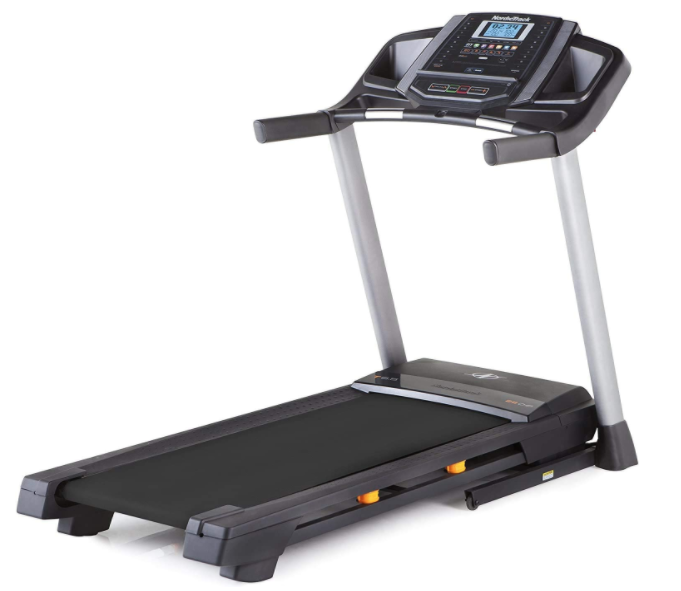
Walking treadmills designed specifically for seniors have become increasingly popular, and for good reason. Unlike traditional treadmills built for running, these prioritize safety with extended handrails, lower step-up heights, and gentler speeds.

Why walking treadmills work well for seniors:

You can exercise regardless of the weather, time of day, or safety concerns about your neighborhood. The padded belt reduces impact on joints compared to concrete sidewalks, and having handrails provides security if you have balance concerns. You also have complete control over your pace and can stop immediately if needed.

Top Walking Treadmill Recommendations:

Best Value: CIIHI Walking Treadmill

Best for: budget-conscious seniors who want indoor walking with long handrails and simple, easy-to-use controls.

Ciihi walking treadmill product image

This foldable treadmill has long handrails for balance and supports up to 300 lbs. The large LED display is easy to read, and at this price point, it’s been a reader favorite. The 2.25 HP motor handles walking speeds smoothly, and it folds up for storage when not in use.

See Current Price


Mid-Range Pick: Redliro Walking Treadmill

Best for: regular walkers who want extended handrails, added comfort features, and a more supportive walking experience.

Product Image - Redliro Walking Treadmill

These models consistently get positive feedback from readers. The long handrails extend almost the full length of the treadmill, providing support throughout your entire workout. Many models include phone and cup holders—small details that make it more enjoyable to use while watching TV or listening to music.

See Current Price


Premium Option: Exerpeutic Recovery Treadmill

Best for: rehabilitation, balance concerns, or anyone who needs very low starting speeds and maximum safety support.

Product image of Senior Fitness Treadmill

This is specifically designed for recovery and rehabilitation, with full-length safety rails and a very low starting speed (0.3 mph). If you’re recovering from surgery or an injury, or if balance is a significant concern, the extra safety features are worth the investment.

See Current Price


What to look for in a walking treadmill:

  • Extended handrails (ideally full-length or near full-length)
  • Low starting speed (0.5 mph or lower)
  • Low step-up height (under 6 inches)
  • 300+ lb weight capacity
  • Emergency stop function
  • Foldable design for storage
  • Heart rate monitoring
  • Walking belt size that feels stable (wider is often easier for balance)
  • Quiet motor if you’ll use it in an apartment or shared living space

For a deeper look at safety features, sizing, and how to choose the right model for your space, see my guide: Walking Treadmills for Seniors: Safe Indoor Exercise Guide.

Walking Treadmill vs. Walking Pad: What’s the Difference?

Walking pads are compact, usually without handrails, and designed to fit under a desk. They’re great for small spaces but lack the stability features that many seniors need. Walking treadmills have handrails and are designed for dedicated exercise sessions. If balance is a concern, choose a treadmill with handrails over a walking pad.

If you’re ready to compare specific models, features, and user feedback, see my updated roundup: Best Walking Treadmills for Seniors: Reviews.


Best Seated Exercise Equipment

Under-Desk Ellipticals

These have been incredibly popular with my readers—especially those recovering from surgery, dealing with mobility limitations, or who simply want to exercise while watching TV. I’ve recommended over a dozen different models, and the feedback has been consistently positive.

Why under-desk ellipticals are ideal for seniors:

You can exercise while seated, which eliminates fall risk and takes pressure off your joints. The elliptical motion is smooth and low-impact, making it perfect for arthritis or knee problems. Many readers tell me they appreciate being able to exercise while doing other activities—reading, watching TV, or even working at a desk. The compact size also means they don’t take up much space and can be easily stored when not in use.

Who should use caution:

If you have severe knee pain, uncontrolled swelling, or hip restrictions after surgery, check with your physical therapist first—some seated machines can aggravate certain joint angles.

Top Under-Desk Elliptical Recommendations:

Best Budget Option: ANCHEER Under-Desk Elliptical

Best for: seated cardio on a budget, especially for watching TV or gentle daily movement.

Product image ANCHEER Under Desk Elliptical Machine

This model has been especially popular with readers because it delivers solid performance at an accessible price. It’s quiet enough to use while watching TV, has adjustable resistance levels, and the LCD display tracks your time, distance, and calories. Several readers have told me it’s been a great fit for their at-home exercise routine.

See Current Price


Mid-Range Pick: Sunny Health & Fitness Under-Desk Elliptical

Best for: users who want smoother, quieter pedaling with optional app-based progress tracking.

Product Image Sunny Health & Fitness Under Desk Pedal Elliptical Machine

Sunny Health & Fitness makes reliable equipment, and their ellipticals are no exception. These models offer magnetic resistance for smoother, quieter operation. Some models include smart features that connect to apps for tracking your progress over time.

See Current Price


Premium Option: Cubii JR1

Best for: long-term seated exercise when comfort, quiet operation, and workout tracking are top priorities.

Product image - Cubii JR1, Under Desk Elliptical

If you want the best of the best, Cubii is worth considering. The build quality is noticeably higher, it’s extremely quiet, and it includes Bluetooth connectivity to track your workouts through their app. The ergonomic design also means more comfortable pedaling for longer sessions.

See Current Price


What to look for in an under-desk elliptical:

  • Adjustable resistance levels (at least 8 settings)
  • Quiet operation (under 60 decibels)
  • LCD showing time, distance, and calories
  • Low profile (fits under most desks and tables)
  • Non-slip pedals
  • Weight capacity 250+ lbs
  • Reverse pedaling option for working different muscles

Pro Tip: If you’re using this while seated in a chair, make sure your chair doesn’t roll away. Either use a stationary chair or place a mat underneath to keep everything stable.

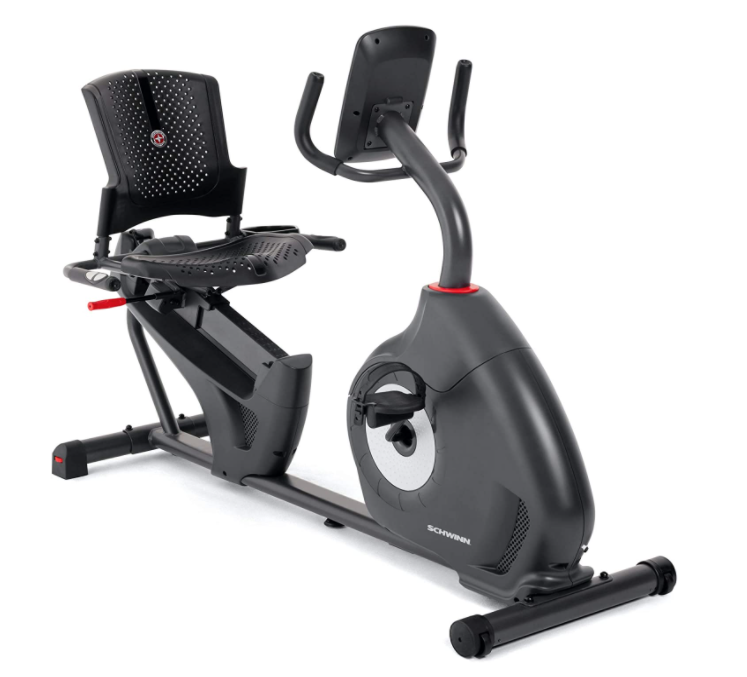
Recumbent Exercise Bikes

Best for: seniors with arthritis, back pain, balance concerns, or anyone who wants comfortable, low-impact cardio with full body support.

Recumbent exercise bikes are one of the most comfortable and joint-friendly cardio options for seniors. Unlike upright bikes, they feature a reclined seating position with back support, making them especially popular for arthritis, back pain, or balance concerns.

Why recumbent bikes work well for seniors:

The seated, reclined position reduces strain on the knees, hips, and lower back while still providing effective cardiovascular exercise. Because your feet stay securely on the pedals and your body is supported, recumbent bikes offer a stable, low-impact workout that feels safer and more comfortable than many upright options.

Key Benefits of Recumbent Bikes

  • Supportive seat with backrest for comfort and posture
  • Low-impact movement that’s gentle on joints
  • Easy step-through design for safer mounting and dismounting
  • Stable platform with minimal balance demands
  • Good option for longer, steady cardio sessions

Not sure which recumbent bike is right for you? 6 Best Recumbent Exercise Bikes – Buying Guide walks through the best options and what to consider based on comfort and mobility.

Mini Exercise Bikes / Pedal Exercisers

If you’re looking for something even more budget-friendly than an under-desk elliptical, mini exercise bikes (also called pedal exercisers) are a great option. These are particularly popular for physical therapy and early-stage recovery.

Budget-Friendly: Himalaya Mini Exercise Bike

Best for: ultra-budget, portable exercise for arms or legs during recovery or light daily movement.

himaly Under Desk Bike Pedal Exerciser

This simple pedal exerciser gets the job done at an incredibly affordable price. It’s lightweight, portable, and works for both arm and leg exercises. The LCD screen tracks your progress, and the adjustable resistance lets you increase difficulty as you build strength.

See Current Price


Best for Stability: Vaunn Pedal Exerciser

Best for: rehabilitation or limited mobility when stability and ease of use matter most.

Vaunn Wrist Arm Leg Strengtheners Pedal Exerciser

This model comes fully assembled and has a wider base for better stability. It’s particularly good if you have limited mobility or are using it for rehabilitation purposes.

See Current Price


What to look for in a mini exercise bike:

  • Sturdy, non-slip base
  • Adjustable resistance
  • Can be used for both arms and legs
  • Simple LCD
  • Easy assembly (or comes pre-assembled)
  • Lightweight for portability

Strength & Resistance Training

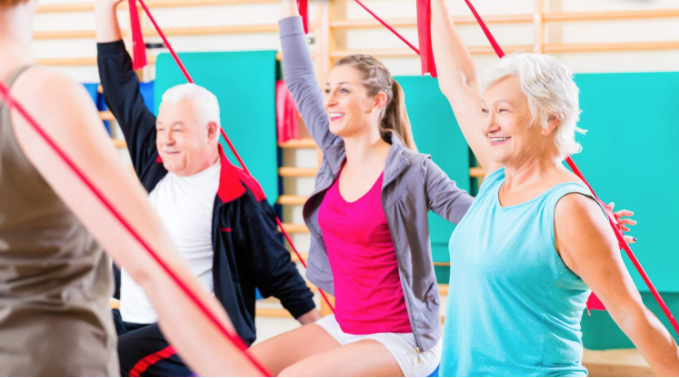
Resistance Bands

Best for: full-body strength training at home with minimal space, cost, and joint stress.

While I haven’t sold as many resistance bands as walking poles or ellipticals, they remain highly recommended by physical therapists and are one of the safest, most versatile pieces of exercise equipment you can own.

Why resistance bands are perfect for seniors:

They provide adjustable resistance without the risk of dropping heavy weights. You can do a complete full-body workout with just bands; they’re incredibly affordable, and they’re easy to store and travel with. The resistance is also gentler on joints compared to free weights, while still building strength effectively.

Types of Resistance Bands:

Tube Bands with Handles

Best for: seniors who want easy-to-grip resistance for both upper and lower body exercises.

These are the most versatile for seniors. The handles make them easy to grip, and you can use them for a wide variety of upper and lower body exercises. Look for sets that include door anchors and ankle straps for more exercise options.

Loop Bands

Best for: lower-body, hip, and glute strengthening, especially for physical therapy movements.

These are continuous loops of elastic material, great for leg exercises and physical therapy movements. They’re particularly useful for hip and glute strengthening.

Therapy Bands

Best for: controlled rehabilitation exercises that require lighter, more precise resistance.

Also called Therabands, these are flat, non-looped bands often used in physical therapy. They’re excellent for rehabilitation and controlled, precise movements.


Recommended Set: TheFitLife Exercise Resistance Bands
TheFitLife Resistance Bands with Handles

This set includes five resistance bands that stack up to 150 lbs of resistance, handles, ankle straps, and a door anchor. It’s a complete package that gives you everything you need to get started.

See Current Price


What to look for in resistance bands:

  • Multiple resistance levels (usually color-coded)
  • Comfortable handles or grips (for tube bands)
  • Durable latex or fabric construction
  • Door anchors for more exercise variety
  • Ankle straps for lower body work
  • Instructional guide or access to online videos

How To Start Safely

  • Start with the lightest band and 8–10 slow reps
  • Keep tension controlled (no snapping)
  • Stop if you feel sharp pain (muscle fatigue is okay; joint pain isn’t)

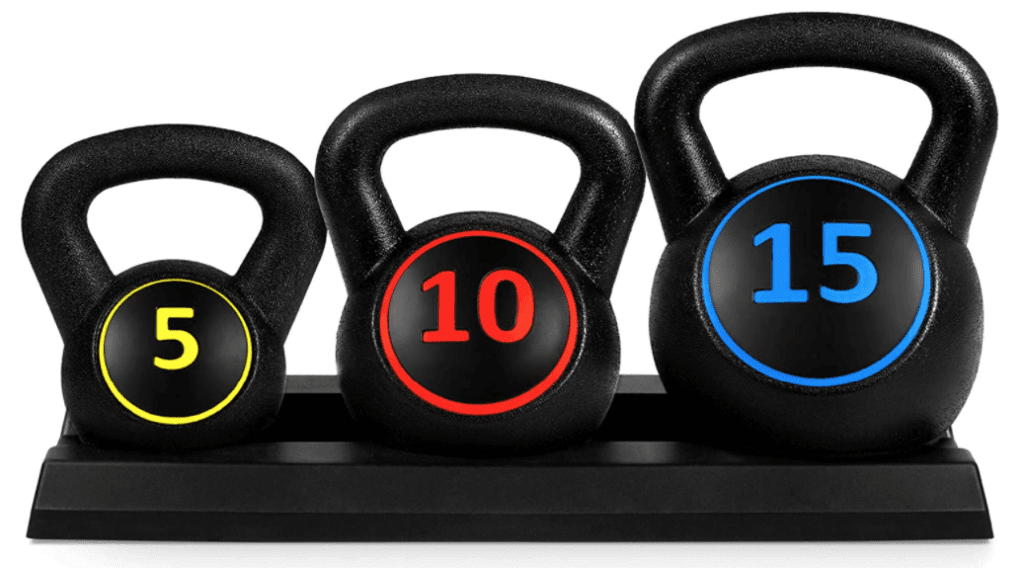
Light Dumbbells

Free weights can be beneficial for building and maintaining muscle mass, but proper form is crucial to avoid injury.

Adjustable vs. Fixed Weight Dumbbells:

Adjustable dumbbells are more expensive upfront, but save money long-term since you can change the weight as you get stronger. They also save space since you’re not storing multiple pairs of dumbbells.

Fixed-weight dumbbells are simpler to use—just pick them up and go. For seniors, I typically recommend starting with 3-5 lb weights for arm exercises and 5-10 lb weights for larger muscle groups.

Amazon Basics Neoprene Dumbbells

Best for: simple strength training at home with comfortable grips and easy weight selection.

Amazon Basics Neoprene Dumbbell Hand Weights

These come in various weights, have a comfortable grip, and the neoprene coating prevents them from rolling away. Start lighter than you think you need—proper form is more important than heavy weight.

See Current Price


Important safety notes for using dumbbells:

  • Start with lighter weights to master form
  • Perform exercises slowly and with control
  • Breathe throughout the movement (don’t hold your breath)
  • Stop if you feel sharp pain
  • Consider working with a physical therapist or trainer initially to learn proper form

Outdoor Exercise Equipment

Adult Tricycles

Best for: outdoor exercise and short errands when balance is a concern but independence is important.

Several readers have shared that adult tricycles give them a nice combination of exercise and practical transportation. Unlike traditional bicycles, tricycles won’t tip over, making them a safe option for seniors concerned about balance. Quality adult tricycles typically range from $279-$385, with electric options available from $631-$1,139 for those who want pedal assistance on hills.

For detailed recommendations on choosing the right tricycle, read: 3 Best Adult Tricycles: Top Picks Comfort & Stability

What to look for in an adult tricycle:

  • Step-through frame (easier to mount and dismount)
  • Comfortable seat with back support
  • Large rear basket for carrying items
  • 7-speed options for hills (versus single-speed)
  • Sturdy construction with 300+ lb weight capacity
  • Easy-to-use hand brakes

Note: Tricycles can serve double duty as both exercise equipment and mobility aids for those who find walking long distances challenging but still want independence for errands and outings.


Equipment for Specific Needs

For Arthritis

Best choices:

  • Under-desk ellipticals: Gentle, smooth motion won’t aggravate joints
  • Recumbent bikes: Back support and comfortable seated position
  • Resistance bands: Adjustable resistance lets you work within your comfort zone
  • Walking poles: Can help reduce stress on knees and hips by improving posture and distributing load.

Avoid: High-impact activities and equipment that puts excessive stress on joints.

For more exercise ideas that are gentle on joints, see my guide: Safe Low Impact Exercises for Seniors.

For Balance Issues

Best choices:

  • Walking poles: Two extra points of contact with the ground (my #1 recommendation)
  • Walking treadmills with handrails: Exercise safely with support
  • Under-desk ellipticals: Seated exercise eliminates fall risk
  • Balance boards: Budget-friendly option for improving stability (use near a wall or stable surface)

If balance is a concern, improving stability through daily movement and simple lifestyle changes can make a big difference. I cover practical strategies in Balance Matters: Essential Tips for Senior Well-Being.

Avoid: Equipment without handrails or support, anything requiring quick movements or balance challenges beyond your current ability.

For Limited Space

Best choices:

  • Under-desk ellipticals: Compact and easily stored
  • Resistance bands: The ultimate space-saver
  • Folding walking treadmills: Fold up when not in use
  • Mini exercise bikes: Small footprint, easy to tuck away

Avoid: Large, stationary equipment that can’t be moved or folded.

For Post-Surgery or Rehabilitation

Best choices (consult your doctor or physical therapist):

  • Pedal exercisers: Great starting point for gentle movement
  • Under-desk ellipticals: Progress to this as you build strength
  • Resistance bands: Controlled, safe strengthening
  • Walking poles: When cleared for walking, these provide crucial support

Progression: Start with seated exercise (pedal exercisers, under-desk ellipticals), then progress to supported walking (treadmills with handrails or walking poles outdoors), and finally add resistance training as you build strength.


Buying Guide: Budget Recommendations

Under $50

  • Resistance bands ($15-45)
  • Mini pedal exercisers ($33-43)
  • Balance boards ($20-40)
  • Fixed weight dumbbells ($10-25 per pair)

Best value in this range: Resistance bands give you the most versatility for the price.

$50-$150

  • Walking poles ($29-75)
  • Basic under-desk ellipticals ($79-119)
  • Mini exercise bikes ($43-109)

Best investment in this range: Walking poles—readers consistently report excellent results, especially with improved confidence and stability when walking.

$150-$400

  • Quality walking treadmills ($289-389)
  • Premium under-desk ellipticals ($219-324)
  • Adjustable dumbbells ($150-250)

Best choice in this range: Walking treadmill with handrails if you have the space; under-desk elliptical if space is limited.

$400+

  • Premium walking treadmills ($500-800)
  • Recumbent exercise bikes ($469-659)
  • Adult tricycles ($279-385 standard, $631-1,139 electric)

Worth the investment if: You’re committed to regular exercise and want equipment that will last for years.


Safety Features Checklist

Before purchasing any exercise equipment, verify it includes appropriate safety features:

Essential safety features:

  • ✓ Emergency stop mechanisms (for motorized equipment)
  • ✓ Handrails or handles for balance support
  • ✓ Weight capacity well above your current weight (ideally 300+ lbs)
  • ✓ Non-slip surfaces (pedals, belts, grips)
  • ✓ Stable, wide base (won’t tip easily)
  • ✓ Easy on/off access with low step-up height

Nice to have:

  • ✓ Heart rate monitoring
  • ✓ Clear, easy-to-read displays
  • ✓ Adjustable speed/resistance
  • ✓ Safety key that stops the equipment immediately

Space Considerations

Before purchasing, measure your space:

  1. Floor space: Measure where the equipment will sit during use
  2. Storage space: If foldable, where will you store it?
  3. Clearance: Add at least 2 feet around treadmills and larger equipment for safety
  4. Ceiling height: Ensure you have adequate headroom if stepping onto equipment

Best for small spaces:

  • Under-desk ellipticals (1-2 sq ft)
  • Resistance bands (essentially no space required)
  • Mini exercise bikes (1-2 sq ft)
  • Folding treadmills (can be stored vertically)

Equipment with built-in portability: Look for items with wheels or handles that make them easy to move from room to room or into storage.


What to Avoid

While most exercise equipment can be used safely with proper precautions, some items pose higher risks for seniors:

Equipment to approach with caution:

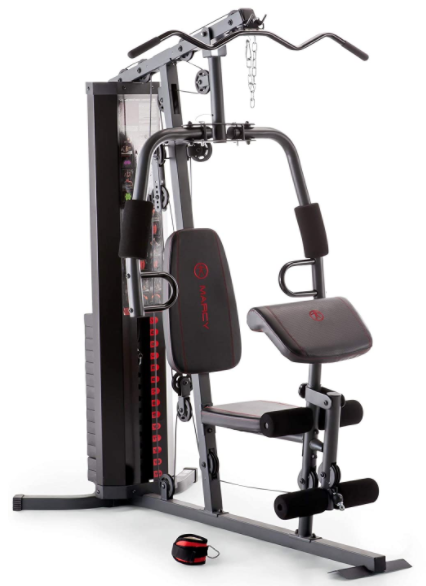
Weight machines without proper instruction:

While these can be safe, they require proper form and technique. Consider working with a trainer or physical therapist initially.

High-impact equipment if you have:

  • Osteoporosis (risk of fractures)
  • Recent joint replacements (follow surgeon’s guidelines)
  • Severe balance issues (stick with seated or supported options)

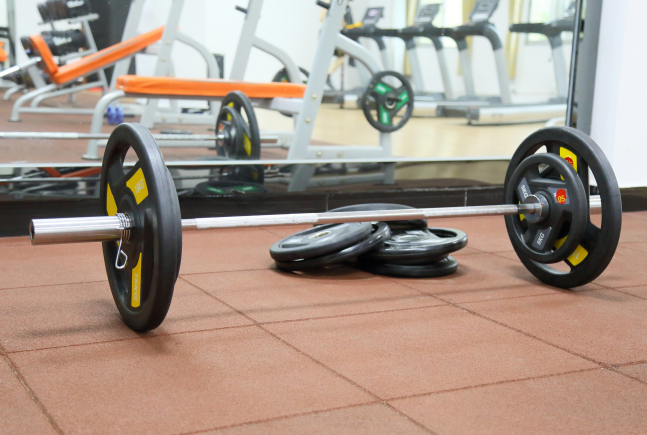
Barbells without a spotter:

Free weights like barbells can be dangerous if you lose control of them. Serious injuries have occurred when barbells have fallen on users. If you do use barbells, always have a spotter present and consider using safety equipment like a power rack.

Equipment without clear weight limits:

If a product doesn’t list its weight capacity, don’t buy it. This is a basic safety specification that should always be included.

“As seen on TV” equipment with limited reviews:

Be cautious of heavily marketed products with few verified customer reviews. Stick with established brands that have a track record.


My Top Recommendations Based on What Actually Works

Based on reader experiences and real-world use, here’s what I most often recommend:

1. For most seniors: Walking Poles ($30–75). Readers who use walking poles consistently tell me they feel more stable and confident when they walk. They’re affordable, versatile, improve both exercise and daily activities, and significantly reduce fall risk. This is my #1 recommendation for getting started.

2. For year-round exercise: Under-Desk Elliptical ($79–324). Perfect if you want to exercise regardless of weather, prefer seated exercise, or have limited space. Many readers with mobility limitations have told me this type of setup makes it much easier to stay active.

3. For serious walkers: Walking Treadmill with Handrails ($289-389). If you’re committed to a walking routine and want a controlled environment with safety features, a treadmill designed for seniors is worth the investment.

4. Best budget pick: Resistance Bands ($15-45). For the price, nothing beats the versatility of resistance bands. A complete set costs less than dinner out and can provide a full-body workout.

Remember: The best exercise equipment is the one you’ll actually use. Choose something that fits your lifestyle, abilities, and preferences. Start with one piece of equipment, establish a routine, and add more as you progress.

Before beginning any new exercise program, consult with your doctor—especially if you have existing health conditions, have had recent surgery, or are managing chronic conditions like heart disease or diabetes.


Frequently Asked Questions

What’s the best exercise equipment for seniors with limited mobility?

Under-desk ellipticals and mini pedal exercisers are excellent for limited mobility since they can be used while seated. They provide low-impact cardiovascular exercise without requiring standing or balance.

How much should I spend on exercise equipment?

Start with budget-friendly options like resistance bands ($15-45) or walking poles ($30-75) to establish a routine. Once you know you’ll use the equipment regularly, invest in higher-quality items like treadmills or ellipticals.

Is it better to buy one piece of quality equipment or several cheaper items?

It depends on your needs. If you know exactly what you want (like a treadmill for daily walking), invest in quality. If you’re exploring different types of exercise, start with affordable options like resistance bands and walking poles, then upgrade based on what you enjoy.

What’s the safest exercise equipment for seniors?

Seated options like under-desk ellipticals and pedal exercisers have the lowest risk since they eliminate falls. Walking poles are the safest standing option since they provide stability and support.

Can I get a good workout with just resistance bands?

Absolutely. Resistance bands can provide a complete full-body workout and are recommended by physical therapists for building and maintaining strength. The key is learning proper form and progressively increasing resistance.

What’s better: under-desk elliptical or pedal exerciser?

An under-desk elliptical usually offers a smoother, more natural motion and is more comfortable for longer, low-impact workouts. Pedal exercisers are more affordable and portable, making them a good choice for short sessions or rehabilitation. If comfort and regular use matter most, an elliptical is often the better option.

Do walking poles help with knee pain / arthritis?

Walking poles may help some people with knee pain or arthritis by improving posture and reducing stress on the knees during walking. They aren’t a treatment, but many people find they make walking feel more stable and comfortable. Start slowly and talk with your healthcare provider if you have ongoing joint concerns.


Final Thoughts

Staying active is one of the most important things you can do for your health as you age. Exercise helps maintain muscle mass, supports bone density, improves balance, enhances mood, and can even improve cognitive function.

The key is finding equipment that works for your body, fits your space, and—most importantly—that you’ll actually use. If it’s hard to set up, uncomfortable, or takes up too much space, it won’t get used—no matter how “good” it is. Don’t feel like you need to buy everything at once. Start with one piece of equipment that addresses your primary goal, whether that’s better balance, cardiovascular health, or maintaining strength.

What exercise equipment has worked best for you? Do you have questions about choosing the right equipment for your needs? Share your experience in the comments below—your insights might help other readers make the best choice for their situation.


Discover more from Living Your Senior Life

Subscribe to get the latest posts sent to your email.

4 Comments

  1. So many interesting facts within this one article! I have always wanted to exercise inside but never took into consideration buying the equipment you used in this article. thank you for sharing and taking the time to write this strong article!

    1. Hi James,

      Thank you for visiting and for your comment. Though I like going outside to exercise sometimes the weather doesn’t cooperate and it’s nice just staying in. Thank you again.

    1. @Nivana Tech,

      Thank you for taking the time to read the post and your kind words. Yes, so many times weight equipment is forgotten in our workout routines. Thank you again.

Comments are closed.